










Winners ESSS-Bosepo-Science Expo
Our pupils recently won impressive prizes in different science competitions.
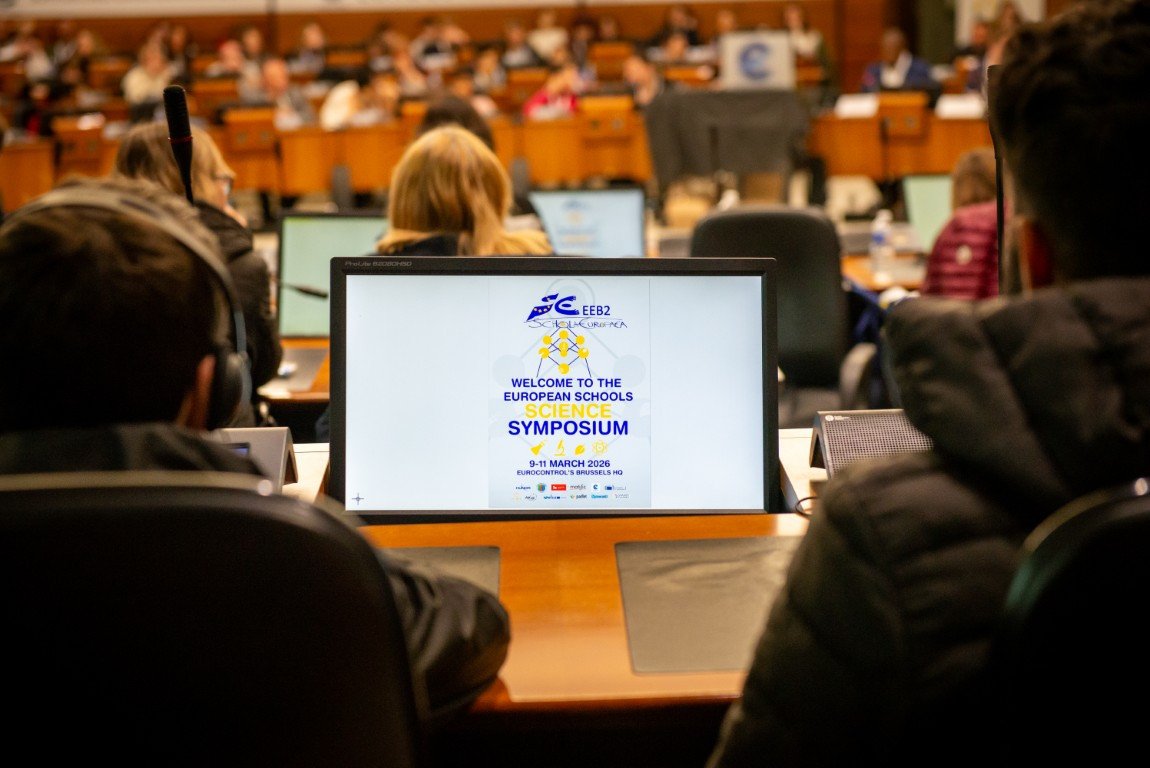
Second prize ESSS 2026 Eurocontrol Brussels 11th of March and winners of the internal selection process EEB2 for the ESSS 2026
Detecting Cortisol with a Colorimetric Biosensor
MANGA HORLBECK, Louise-Eleonor; DI PALMA, Frida, ASTON Torin
European School Brussels II-Woluwe. Mentor: Stephanie Weick.
What is our project’s purpose? We adapted a biometric cooler sensor to detect cortisol in the human body. We got our ideas from examples from nature such as seahorses changing their color when stressed. There are a lot of stress-related diseases or diseases that can worsen due to stress, which is why it is important to know beforehand if there is cortisol in the body. Our aim is to help these people detect cortisol as fast as possible so that measures can be taken.
Cortisol is a hormone produced by the body in response to stress. It helps regulate metabolism, reduces inflammation, controls blood pressure, and helps the body react to danger. It is important to be able to detect cortisol since it can lead to stress-related diseases, such as Cushing Syndrome or Adrenal Adenoma. This means that conditions can be caused or worsened through the stress hormone cortisol, making it even more important to detect it early on to be able to act faster.
In our experiment, we used a colorimetric sensor that detects substances through visible color changes. Such sensors are useful because they are fast and easy to observe. In nature, similar mechanisms exist, such as animals changing colour in response to environmental or physiological stress. In another experiment, the reversibility of our sensor was tested by using an ultrasonic cleaner. This would make the sensor practical to work with and cheaper. To gain better insight, we looked at the sensor under a microscope at 400 times magnification. The aim of this experiment is to develop a simple colorimetric biosensor capable of detecting cortisol through a visible color change.
Gold medal Bosepo, Sarajevo 28th of March 2026 and winners of the 3rd prize Science Expo Belgium 2025, winners of the internal selection process ESSS 2025
Research on FORL illness in cats
VANDEN BORRE Garance, MINGATOS,Matilde, DETHIER Diane
European School Brussels II-Woluwe, Mentor: REDL-REINERT, Michaela
Abstract
Purpose of the investigation
Feline Odontoclastic Resorptive Lesion (FORL), also known as Tooth Resorption (TR) is a common and painful dental disease affecting approximately one third of cats, especially those over 5 years old. The disease is caused by an excessive activity of odontoclasts which break down dental tissue from within the tooth. Unlike caries, which originates from the presence of bacteria in the saliva, TR involves internal processes.
Despite its commonness and severity, the disease remains relatively unknown to most cat owners. The only current treatment is the full extraction of the affected teeth, which significantly impacts the cat’s quality of life. This experiment aims to investigate the mechanisms behind FORL as well as to explore other treatment alternatives.
Problem and hypotheses
This research focuses on targeting the biological mechanisms responsible for odontoclastic activity to find other potential treatments.
Two main approaches were developed. The first approach involves enzyme inhibition, specifically targeting the acidification process (via proton pumps such as V-ATPase) and the degradation of the organic matrix through proteases like cathepsin K.
The second approach focuses on the regulation of the RANKL/RANK/OPG pathway and the immune response. This includes increasing osteoprotegerin (OPG) levels, using denosumab to block RANKL, applying alendronate to inhibit odontoclast activity, and targeting inflammatory interleukins (IL-1β and IL-6) that contribute to disease progression.
Procedure
The investigation began with research to understand the fundamental mechanisms of Tooth Resorption. This was followed by consultation with veterinary dentist William Barbé who provided us with additional insights, radiographies and relevant sources for our research. Bacterial tests were led on cats, dogs, humans and a horse. These tests were used to evaluate the cat’s ability to develop caries in comparison with other diseases such as TR. Finally, the collected data and literature were used to develop hypotheses concerning the treatment of this disease.
Observation, data and results
The bacterial tests indicated that cats have an oral environment which does not favor acid driven tooth decay. Instead, cats develop TR, which is caused by internal mechanisms rather than bacterial imbalance.
Further research showed that odontoclastic resorption consist of two phases: the acid phase during which mineral dissolution occurs and the protease phase during which the organic matrix gets broken down. The RANKL/RANK/OPG pathways and inflammatory factors such as IL-1 β and IL-6 also seem to play a role in the illness.
Our proposed hypotheses are supported by literature and existing research in human and veterinary medicine, their exact application to TR require further research and experimentation.
Conclusion
This study confirms that TR is fundamentally different from caries and is driven by inflammatory and cellular mechanisms.
The findings lead to several new treatment paths especially focused on enzyme and interleukin inhibition and modulations of the RANKL system.
Whilst these hypotheses show a strong theoretical potential, further research is necessary to evaluate them. The development of such treatments would be revolutionary in treating the disease with a less invasive and more preventive method than the full extraction of the affected teeth.
First prize Science expo Belgium 28th of March and participation in the Milset expo in Medellin Colombia 2026, winners of the internal selection process ESSS 2026
The Potential of Fungal Mycoremediation for Soil Depollution Using Pholiota and Pleurotus Mushrooms
Zoé NAGY, Melina RAPTIS, Mia GUERRERO (S6FRD)
European School Brussels II- Woluwe. Mentor: DUQUENNE, Nicolas
Soil pollution caused by human activities is a major environmental threat, as contaminated soils can negatively impact ecosystems and human health. Most traditional soil remediation methods currently in use remain expensive and environmentally invasive which motivated the investigation of a more biological alternative, such as mycoremediation. In this experiment, the aim was to evaluate the potential role of mushrooms in pollution reduction by assessing whether Pholiota adiposa and Pleurotus ostreatus mushrooms can reduce pollution levels in contaminated soil using a controlled experimental model. Mycelium cultures were first developed under sterile conditions on Potato Dextrose Agar(PDA).
Sixteen substrates were prepared using either hay or sawdust, sterilized at 120°C for three hours. To simulate hydrocarbon contamination while ensuring laboratory safety, oxidized vegetable oil was used instead of real hydrocarbons. Four experimental conditions were established for each substrate: direct mycelium injection, PDA culture with oxidized oil, PDA culture with oxidized colored oil, and a water-only control group.
Each condition was tested with both fungal species. Growth was monitored macroscopically, and microscopic observations were performed after several weeks of growth to detect and inspect lipidic residues.
Out of sixteen trials, six showed successful mycelial development. Pleurotus ostreatus demonstrated significantly better growth than Pholiota adiposa, accounting for five of the six successful trials. Pleurotus mushrooms grew comparably on oily and non-oily substrates and showed greater resistance to mold contamination. In contrast, Pholiota growth was frequently inhibited by contamination, which limited the interpretation of results. Hay substrates supported mycelial development more effectively than sawdust, while the combination of sawdust and Pholiota produced no successful growth.
Microscopic analysis confirmed the presence of oily residues in treated samples. The results suggest that Pleurotus ostreatus shows greater tolerance to hydrocarbon like substrates and may be more suitable for mycoremediation applications. However, and substrate choice significantly influence experimental outcomes and should be carefully controlled in future studies.